29 Jul 2026
Altitude Challenges Reshape Endurance Data and Multi-Bet Layers Across South American Leagues
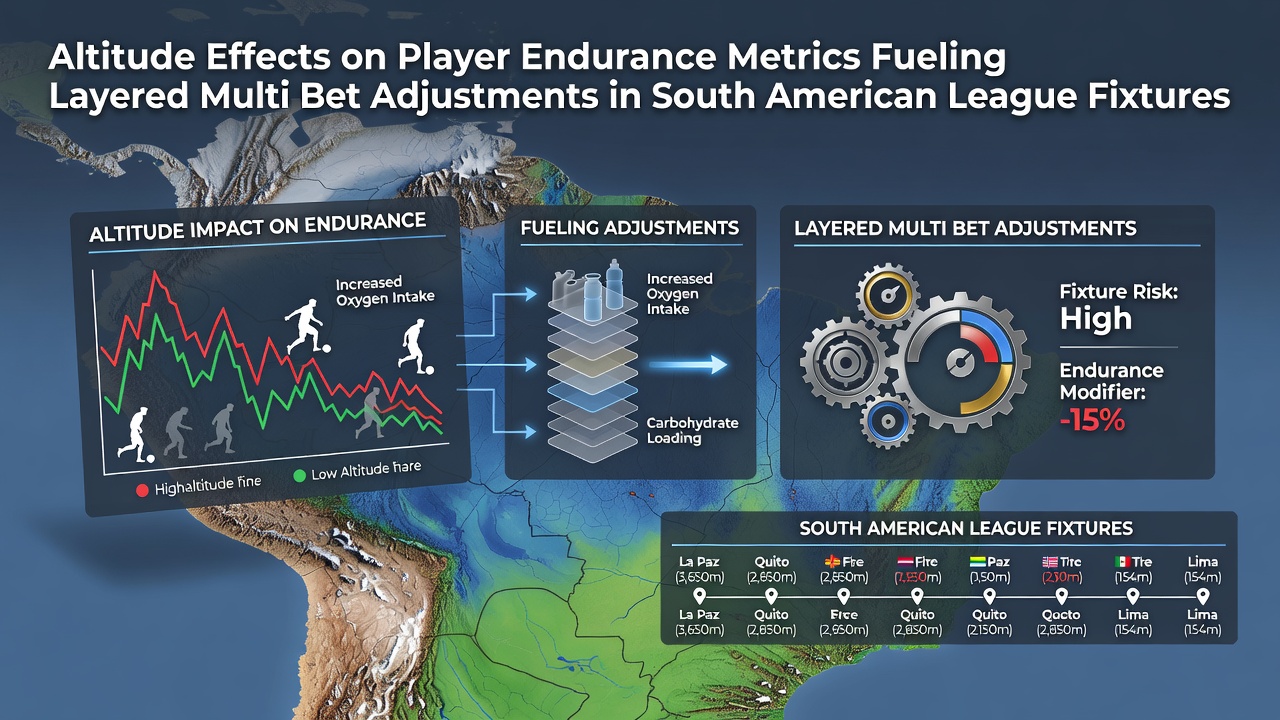
Stadiums situated above 2,500 meters have long defined key fixtures in Bolivia, Peru, Ecuador, and parts of Colombia, where thinner air directly alters oxygen uptake and forces measurable drops in repeated sprint capacity after the 60-minute mark. Researchers tracking heart-rate recovery and GPS-derived distance covered have recorded consistent declines of 12 to 18 percent in total high-intensity running among visiting squads arriving from sea-level bases, while home players maintain closer to baseline outputs through acclimatization protocols that begin weeks before match day. These endurance shifts create predictable windows where second-half goal tallies rise or fall depending on squad rotation patterns and substitution timing, patterns that now feed directly into layered accumulator construction across multiple South American domestic competitions.
Documented Performance Drops at Elevation
Match data compiled across the Bolivian Primera División between 2022 and 2025 shows visiting teams average 1.4 fewer shots on target after the 70th minute when playing at venues such as Estadio Hernando Siles in La Paz, whereas the same sides post near-normal numbers at lower-altitude grounds in Santa Cruz. Similar trends appear in Ecuadorian Serie A fixtures at Quito’s Estadio Olímpico Atahualpa, where GPS files indicate reduced acceleration counts for non-acclimatized midfielders and full-backs once cumulative distance exceeds 8 kilometers. Observers note that coaches increasingly deploy early tactical substitutions around the 55-minute mark to offset these drops, a move that alters in-play odds and forces bettors to recalibrate live legs within multi-bet slips rather than relying on pre-match projections alone.
Fixture Scheduling and Recovery Windows
League calendars often cluster high-altitude rounds in quick succession during the middle of the season, leaving limited recovery time for squads traveling between 2,800-meter and sea-level venues within 72 hours. CONMEBOL medical bulletins released ahead of the 2025 Copa Libertadores group stages highlighted that teams crossing multiple altitude bands reported elevated lactate thresholds persisting for up to five days post-match, a physiological carry-over that affects midweek domestic league availability. Bettors constructing accumulators spanning Bolivian and Peruvian fixtures therefore layer separate endurance filters for each leg, adjusting stake sizing or outright omitting certain selections when a side faces a second consecutive elevated fixture without adequate rest.
Layered Multi-Bet Construction Practices
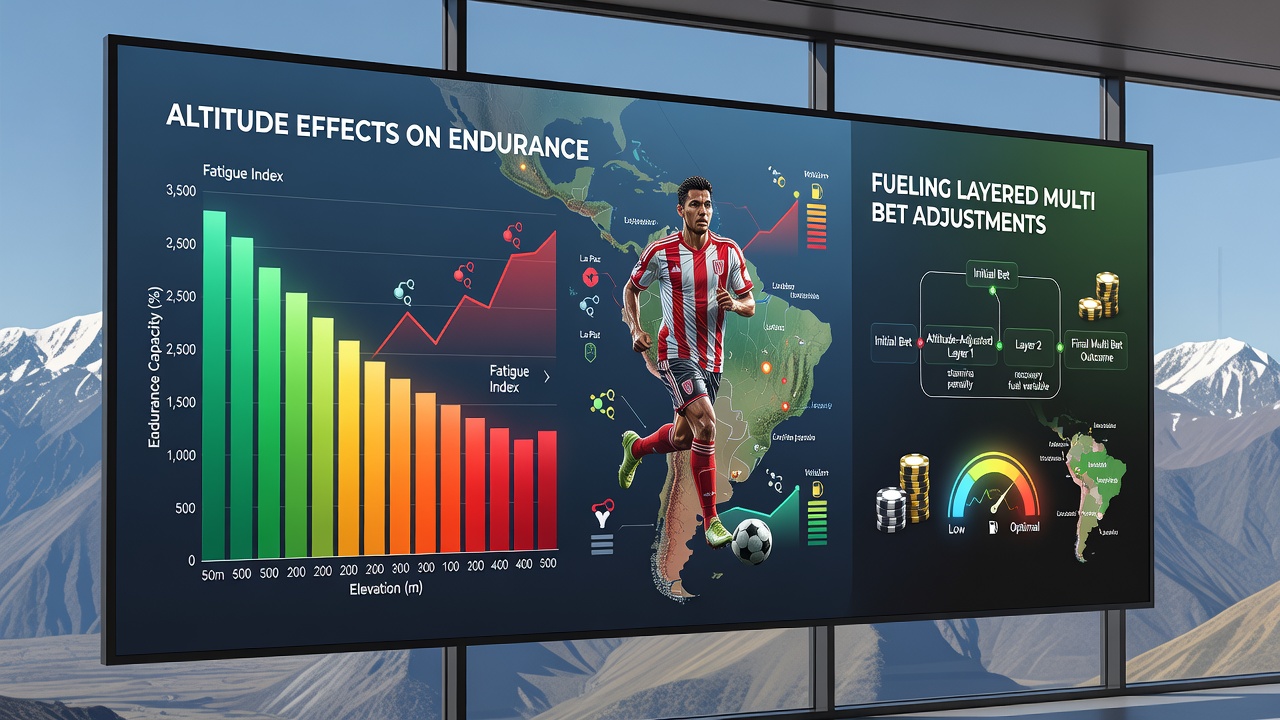
Operators and syndicates now embed altitude-adjusted endurance thresholds into automated models that recalculate expected goal ranges once line-ups and travel itineraries are confirmed. For instance, an accumulator spanning a La Paz home match, an Ecuadorian highland fixture, and a low-altitude Argentine away game receives differentiated probability weightings for each leg rather than uniform multipliers. This approach emerged more visibly during the July 2026 international window when several South American leagues paused for Copa América qualifiers, allowing analysts to review full-season altitude datasets and refine the weighting systems ahead of the second half of domestic campaigns. Those constructing multi-bets frequently split selections into primary endurance legs and secondary value legs, capping exposure on the high-altitude components while allowing larger stakes on statistically stable low-altitude outcomes.
Supporting Research from Varied Regions
A 2024 study published by the Sports Science Institute of South Africa examined GPS and heart-rate data from 14 professional clubs operating across altitude gradients and confirmed that visiting players exhibit delayed post-match recovery markers when descending more than 2,000 meters within 48 hours. Complementary findings from Brazil’s Ministry of Sport performance reports indicate that domestic sides with structured pre-acclimatization camps reduce the typical endurance deficit by roughly one-third, information that now informs selection filters within accumulator frameworks. These datasets allow bettors to differentiate between squads that merely travel to altitude and those that actively prepare for it, tightening the variance bands applied to each leg of a multi-bet.
Practical Application in Current Markets
During the opening months of 2026, several Peruvian and Bolivian clubs published training-camp logs showing extended residency periods at intermediate altitudes before key home fixtures, a tactic that narrowed the performance gap against visiting sides. Accumulator builders responded by reducing the implied edge assigned to home endurance advantages while increasing weight on substitution timing markets and late-game goal lines. The shift demonstrates how endurance metrics, once treated as static environmental factors, now function as dynamic variables that require fresh inputs each match-week rather than season-long assumptions.
Conclusion
Altitude-driven endurance changes continue to supply measurable inputs for multi-bet construction across South American leagues, prompting ongoing refinement of selection criteria based on travel logistics, acclimatization records, and second-half performance splits. As additional GPS and physiological datasets become available through league partnerships and academic collaborations, the layering process grows more granular without altering the fundamental observation that elevation remains a consistent differentiator in fixture outcomes.