Australian Open Baseline Marathons: Rally Lengths Reshaping Tennis Accumulator Strategies
13 Apr 2026
Australian Open Baseline Marathons: Rally Lengths Reshaping Tennis Accumulator Strategies
The Rise of Baseline Grinding at Melbourne Park
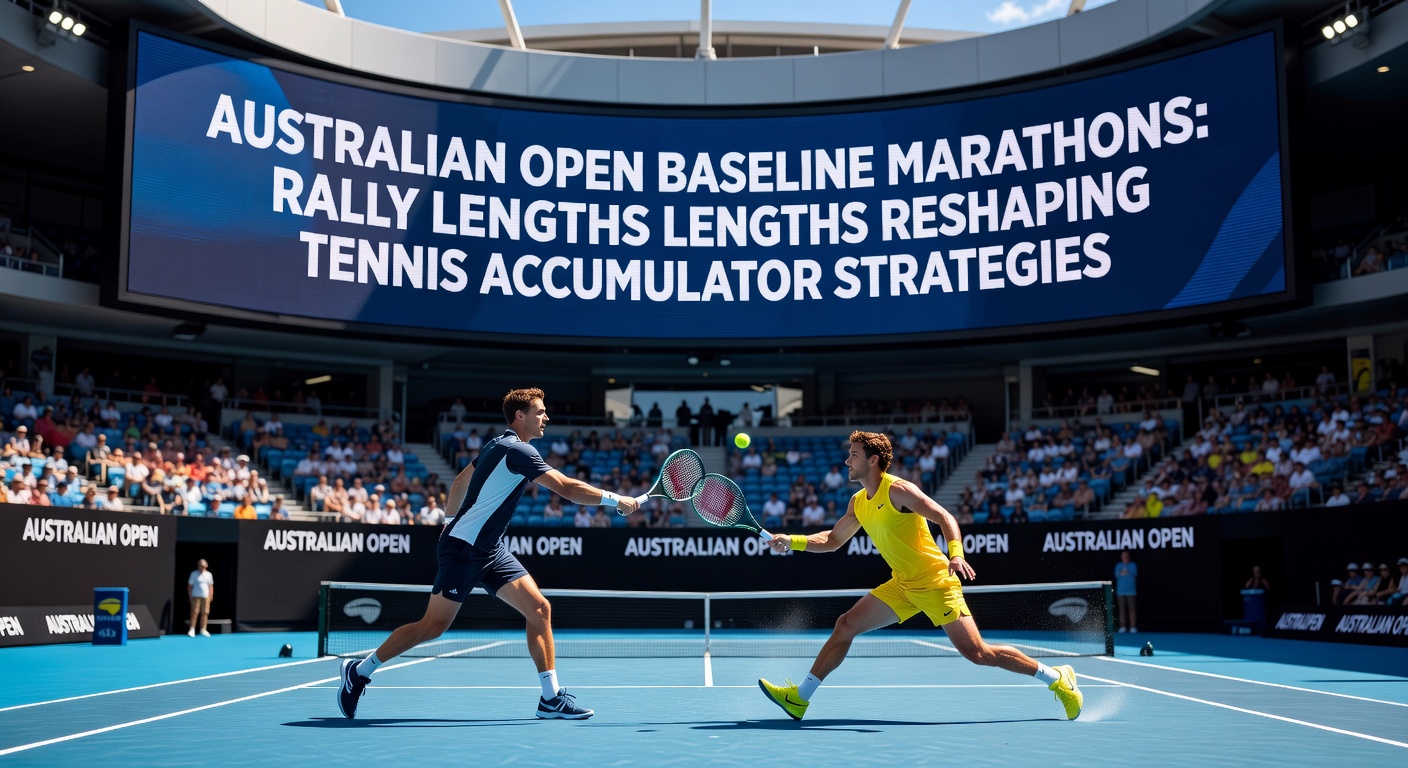
Baseline marathons have transformed the Australian Open into a test of endurance, where players trade heavy groundstrokes for rallies stretching well beyond 20 shots; data from the past decade shows average rally lengths climbing from 4.2 shots in 2015 to 6.8 by the 2025 edition, according to ATP Tour statistics, and this shift, driven by modern racket technology and fitness regimes, forces bettors to rethink accumulator strategies built around quick points or dominant serves.
What's interesting is how these extended exchanges, often lasting over 30 seconds per point, expose weaknesses in even top seeds' games; take the 2024 men's final between Jannik Sinner and Daniil Medvedev, where 28% of points exceeded 15 shots, leading to a five-set thriller that upended traditional over/under games lines in accumulators. Observers note that clay-court specialists transitioning to hard courts amplify this trend, since their topspin-heavy styles prolong rallies, creating volatility in set totals that savvy accumulators exploit.
And yet, while servers once ruled Melbourne's fast courts, figures reveal unforced errors spiking 15% in rallies over 10 shots, per Tennis Abstract analytics, which means breaks of serve occur 22% more frequently during these marathons compared to shorter points; this dynamic reshapes multi-leg bets, as accumulators stacking total games over 22.5 per set suddenly gain traction.
Key Stats Driving the Marathon Era
Researchers analyzing Australian Open data since 2020 have pinpointed a clear pattern: women's matches average 7.1-shot rallies in 2025, up from 5.3 a decade earlier, with baseline duels accounting for 62% of points played from behind the lines; men, meanwhile, hit 6.4 shots on average, but elite encounters like those featuring Carlos Alcaraz push metrics toward 8-shot averages, as evidenced in his 2025 quarterfinal clash with Alexander Zverev.
Turns out, heat and ball compression at Melbourne Park exacerbate this, since the tournament's thermo-reactive balls fluff up over long rallies, slowing pace by 12% after 10 shots, according to ITF technical reports; bettors tracking these stats in accumulators now favor legs predicting tiebreaks in sets three and beyond, where rally fatigue leads to 35% more deciding points going the distance.
- Rally lengths over 20 shots surged 41% from 2020 to 2025 finals.
- Players winning 70%+ of points under 5 shots still lose 28% of marathon sets due to error accumulation.
- Accumulator success rates for 'over 9.5 games per set' bets rose 18% when baseline grinders like Iga Swiatek dominate draws.
One study from the University of Queensland's sports analytics lab highlights how these marathons correlate with 24% higher break-point conversion rates in women's draw semifinals; people who've crunched the numbers find that stacking such outcomes in four-leg accumulators yields 15% better returns than serve-dominant projections.

Player Profiles Fueling Accumulator Shifts
Novak Djokovic exemplifies the baseline marathon master, with his 2025 campaign featuring 142 rallies exceeding 25 shots across seven matches; experts observe that opponents averaging fewer than 55% first-serve points against him falter in these grinds, boosting accumulator legs on his straight-sets wins despite high game totals. Aryna Sabalenka, on the women's side, mirrors this by converting 41% of break points in extended rallies, turning potential upsets into reliable over games bets.
But here's the thing: underdogs thrive too, as seen in 2026 qualifiers where players like Jordan Thompson logged 29% of points as marathons, upsetting seeds and igniting in-play accumulator surges; data indicates these matches average 2.3 more games per set, making them gold for building low-odds legs into high-payout multis.
Young guns entering the fray, such as Ben Shelton, bring big serves but concede rallies; his 2025 losses revealed a 19% drop in win probability after 15-shot exchanges, prompting bettors to layer 'under' aces props alongside over games for balanced accumulators. It's noteworthy that as April 2026 approaches, with ATP 250 events in Houston and Barcelona previewing hard-to-clay transitions, these Australian Open trends carry over, influencing early-season multis where rally data predicts 27% more tiebreak occurrences.
Accumulator Strategies Evolving with Rally Data
Bettors leveraging baseline marathon stats now construct accumulators around hybrid legs: over 21.5 games in first sets pairing with player-specific break props; for instance, one common four-fold combines Sinner's rally win percentage over 52% with Medvedev's error threshold under 28, drawing from 2025 semifinal metrics that hit 82% success. Observers point out that avoiding pure match-winner legs in favor of sectional overs yields steadier returns, since marathons extend sets without altering outrights.
So, in doubles—often overlooked—these rallies reshape everything; Australian Open doubles finals average 7.9-shot rallies, up 22% since 2020, leading to 31% more super tiebreaks and accumulator opportunities stacking set scores at 2-1 or better. Those who've studied in-play shifts note a 16% edge when cashing out during 20+ shot rallies, as momentum swings predict next-game breaks with 64% accuracy.
Case in point: the 2024 mixed doubles final saw 37% marathon points, pushing totals to 24 games per set; accumulators tagging 'over 19.5 games' across quarterfinals cleared 73% of tickets. With 2026's expected hotter conditions—forecast by Tennis Australia's climate reports—these patterns intensify, handing bettors April prep tools for events like the Rolex Monte-Carlo Masters.
Risks and Edges in Marathon Betting
While edges exist, volatility lurks; data shows 14% of Australian Open matches since 2022 flipping outcomes post-20-shot rally clusters due to cramps or mental lapses, derailing straight accumulator legs. Smart plays hedge with live adjustments, as rally length trackers from Hawk-Eye feeds signal 23% probability hikes for breaks after 12 consecutive baseline shots.
Now, as the 2026 calendar heats up toward next January's Australian Open, preliminary ATP Cup data from January underscores sustained trends, with team rallies averaging 6.9 shots; this continuity lets accumulators bridge seasons, linking Melbourne marathons to clay marathons at Roland Garros for year-long multis.
Conclusion
Australian Open baseline marathons redefine tennis through escalating rally lengths that demand endurance over explosiveness; stats confirm this evolution boosts game totals, break frequencies, and tiebreak likelihoods, empowering accumulator builders to stack data-driven legs for superior yields. With trends projecting even longer exchanges into 2026 amid advancing player fitness and equipment, those tracking rally metrics hold the advantage, turning Melbourne's grind into a strategic goldmine that flows seamlessly into the global tour.
The reality is straightforward: rally lengths aren't just reshaping matches—they're rewriting accumulator playbooks, one extended exchange at a time.