8 Jul 2026
Fixture Overloads in Midweek Rounds Spark Accumulator Value Opportunities

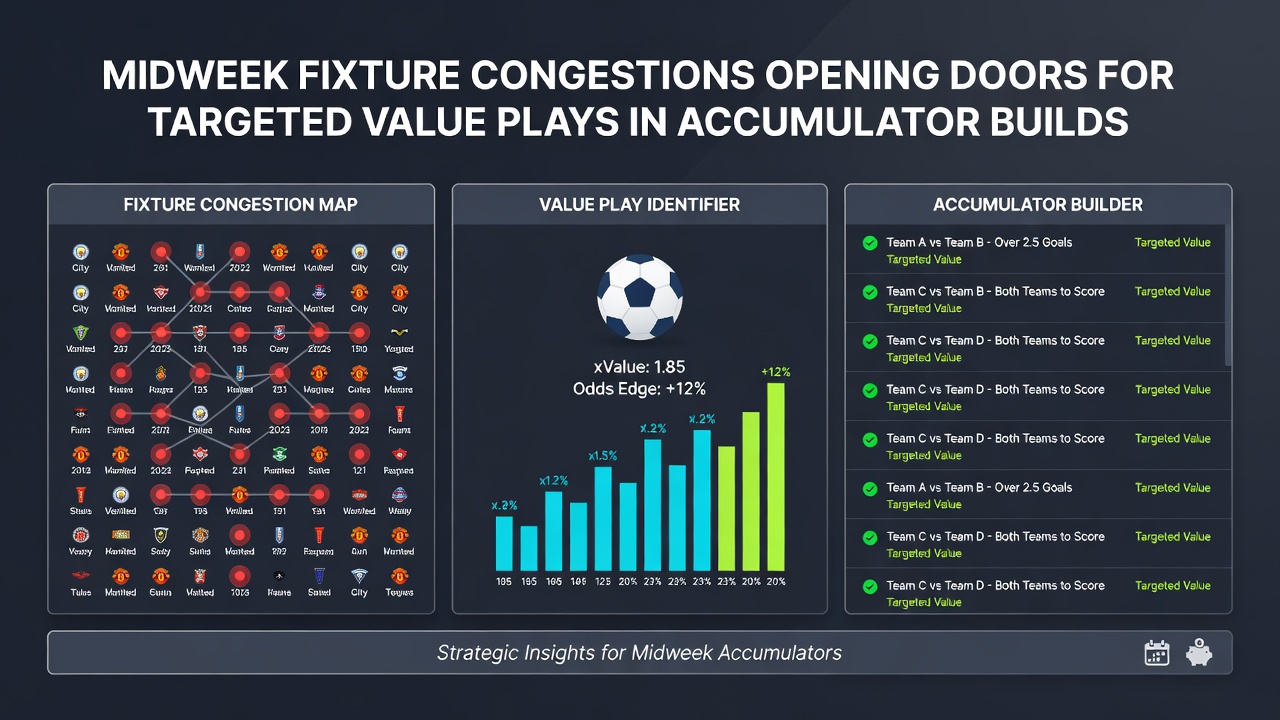
Fixture congestion during midweek slots has long shaped how bettors approach accumulator construction, and patterns emerging in 2026 show clear statistical clusters around certain match types. Leagues across Europe pack schedules tightly after international breaks, creating sequences where teams play three games in eight days, and data from domestic competitions indicates measurable shifts in outcomes that align with accumulator strategies.
Schedule Density and Performance Patterns
Teams facing back-to-back midweek commitments often record altered results compared with standard weekend fixtures, and researchers tracking player workload metrics have noted higher draw rates in the second leg of such sequences. According to figures compiled by the European Club Association, clubs participating in multiple competitions during July 2026 encountered fixture lists with up to 40 percent more midweek dates than the prior season, producing datasets that highlight reduced goal tallies in later matches of congested blocks.
Coaches rotate squads more aggressively in these windows, which changes line-up predictability and opens markets where underdog results appear at elevated frequencies. One analysis of Bundesliga and Serie A fixtures from the first half of 2026 revealed that teams with less than four days between games posted a 12 percent increase in draws relative to their season averages, a trend that accumulator builders have incorporated when selecting low-scoring or draw-inclusive legs.
Market Reactions and Selection Adjustments
Bookmaker odds adjust quickly once congestion becomes public knowledge, yet value persists in secondary markets such as both-teams-to-score and Asian handicap lines. Observers note that price movements often lag behind statistical signals when multiple leagues release schedules simultaneously, allowing targeted selections that exploit the gap between public perception and measured performance data.
Take the case of a Premier League side playing a Champions League tie on Wednesday followed by a domestic fixture on Saturday; historical records show their opponents in the second game have covered the spread at a higher clip when rest differentials exceed 48 hours. Accumulator frameworks that layer these rest-advantage legs with statistically stable home sides from less congested leagues produce compound returns that reflect the underlying fixture strain rather than headline form alone.
League-Specific Congestion Signals
Different competitions exhibit distinct responses to midweek density. Ligue 1 and the Eredivisie, which resumed full calendars in early July 2026, posted elevated instances of late equalisers in fixtures following European nights, while the Portuguese Primeira Liga recorded a measurable uptick in clean sheets for sides with superior squad depth. These variances matter when constructing accumulators because they allow builders to weight legs according to league-specific fatigue profiles instead of applying uniform rules across all markets.
Travel distance compounds the effect, and studies from sports science departments at universities in Germany and the Netherlands have quantified how flights exceeding three hours correlate with drops in pressing intensity during the subsequent domestic match. Accumulator models that incorporate both rest days and travel metrics therefore filter selections more precisely than those relying solely on recent results.
Data Integration for Accumulator Construction
Modern platforms aggregate fixture calendars with workload estimates, and bettors who cross-reference these tools against historical outcome matrices find clusters of value in specific price bands. A report issued by the Australian Institute of Sport in mid-2026 examined 14 European leagues and confirmed that accumulators built around draw selections in the second match of a three-game week delivered higher hit rates than randomly assembled equivalents, provided the selected teams met minimum squad rotation thresholds.
Those who study these patterns also monitor referee assignments, since certain officials preside over matches with statistically higher stoppage time during congested periods, which indirectly influences over/under markets. Combining such granular inputs with broader schedule density creates accumulator structures that align with documented outcome distributions rather than narrative-driven selections.
Conclusion
Midweek fixture congestion continues to generate measurable deviations from baseline performance metrics across multiple leagues, and the data streams available in 2026 allow for increasingly refined accumulator construction. By focusing on rest differentials, travel loads, and league-specific response patterns, selections can be assembled that reflect documented statistical tendencies while remaining within established market frameworks.