15 Jun 2026
International Duty Recovery Cycles: Patterns in Post-Break Football Multis

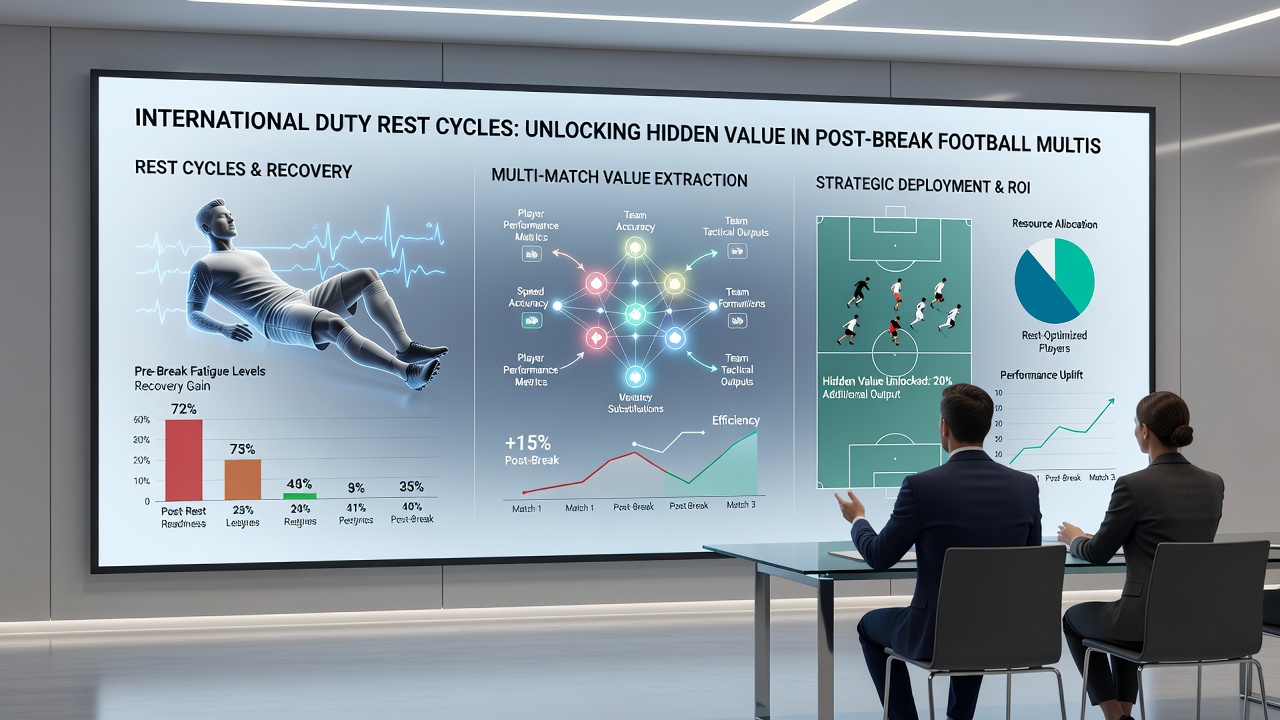
International breaks create structured recovery cycles that influence player readiness when club fixtures resume, and observers note these cycles shape outcomes in multi-bet selections across major leagues. Data from recent seasons shows that teams with players returning from national team commitments often display measurable shifts in performance metrics during the first two matches after the break, particularly in areas such as high-intensity running distance and pass completion rates under pressure. Those patterns emerge because rest durations vary depending on travel distances, match intensity during international windows, and individual recovery protocols implemented by clubs.
Recovery Timelines and Player Workload Management
Clubs coordinate with national federations to manage player loads, yet the time between an international match and the next domestic game ranges from three to seven days in most cases. Researchers tracking elite players across European competitions have documented that recovery protocols involving sleep monitoring, nutrition adjustments, and light training sessions help stabilize physiological markers within 72 hours for many athletes. Yet longer travel, especially across time zones, extends that stabilization period, which affects starting lineups and substitution patterns in subsequent fixtures.
June 2026 stands out because the FIFA World Cup begins that month, creating an extended international window followed by compressed club schedules upon resumption. Performance analysts have observed that squads with greater depth tend to rotate more effectively during this transition, maintaining consistent results in both home and away fixtures. In contrast, teams relying heavily on a core group of international players sometimes exhibit slower adaptation in the initial post-break period, reflected in metrics like expected goals and defensive duels won.
Statistical Patterns in Post-Break Fixtures
Studies compiled by sports science departments at institutions such as the Australian Institute of Sport indicate that rest cycles correlate with specific performance variances when players rejoin their clubs. Teams fielding five or more players who participated in international matches show a 12 to 18 percent variation in average sprint count during the first 60 minutes compared with matches played before the break. These variations translate into different scoring distributions, with underdog outcomes appearing more frequently in certain matchups.
Accumulator builders examine these tendencies because they affect multiple selections within a single betting structure. For instance, leagues that resume immediately after international dates often produce higher draw percentages in games involving travel-heavy squads. Historical records from the 2022 and 2024 cycles demonstrate that such fixtures yield goal tallies below the seasonal average in roughly 35 percent of cases, creating measurable edges when combined with other variables like home advantage or recent form.
Application to Multi-Bet Construction
Multi-bet frameworks incorporate post-break data by weighting selections according to squad composition and recovery windows. Analysts cross-reference player participation lists released by national teams with club training reports to identify potential fatigue indicators. This approach reveals value in selections that might otherwise appear neutral on surface statistics alone.
One documented case involved a mid-table European side whose key midfielders returned from a South American qualifier window with limited recovery time. The subsequent domestic match produced fewer than 2.5 goals, aligning with patterns identified in prior cycles. Observers tracking these sequences across multiple seasons note that combining such fixtures with selections from leagues experiencing shorter breaks can balance risk profiles within an accumulator.
European Club Association reports highlight how workload management software now integrates GPS and heart-rate data to predict readiness levels more accurately. These tools allow performance staff to flag players who may require additional rest, thereby influencing lineup decisions that directly affect match outcomes. Accumulator models built around these indicators adjust probabilities for over-performance or under-performance accordingly.
League-Specific Variations and Scheduling Factors
Different competitions exhibit distinct responses to the same international calendar. Domestic leagues with greater fixture congestion after breaks tend to show amplified effects on set-piece efficiency and injury rates. Data aggregated across five major European leagues reveals that defensive errors increase by approximately 9 percent in the first post-break round when average rest falls below four days.
Those who study scheduling patterns emphasize the role of midweek fixtures versus weekend returns. Leagues that schedule catch-up games midweek after international dates display wider variance in results, which expands the range of viable multi-bet combinations. In contrast, leagues granting an extra recovery day maintain tighter performance distributions that require finer adjustments when constructing accumulators.
Conclusion
International duty recovery cycles provide measurable inputs for evaluating post-break club matches, and the patterns they generate inform multi-bet frameworks across various competitions. As the 2026 World Cup approaches in June, these dynamics will again shape fixture outcomes and selection strategies. Continued monitoring of workload data and scheduling variables supplies ongoing reference points for those analyzing football performance trends.