20 Jul 2026
Momentum Shifts in Late-Stage Matches: Crafting Football Accumulator Selections Around In-Play Indicators
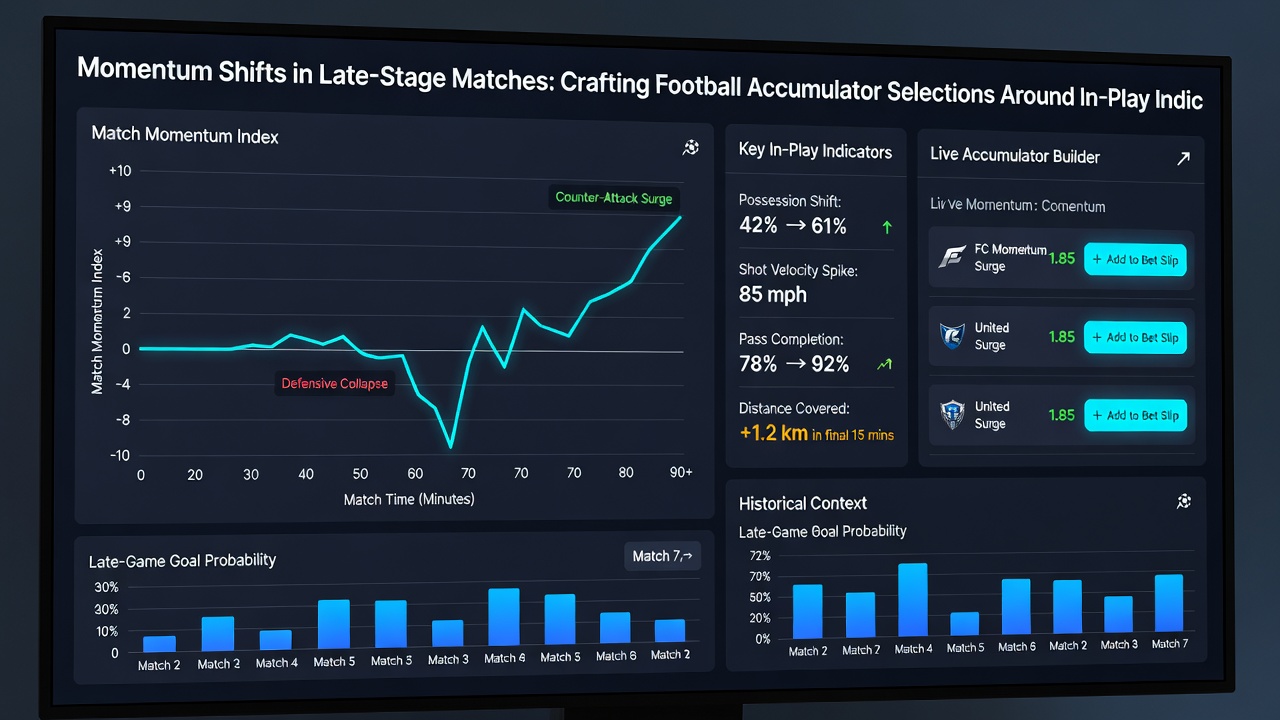
 Observers note that momentum shifts in the closing stages of football matches often determine the direction of accumulator outcomes, particularly when selections hinge on live indicators rather than pre-match form alone. Data from major European leagues during the 2025-2026 campaign shows that roughly 28 percent of goals arrive after the 75th minute, creating opportunities for bettors who monitor possession swings, shot accuracy, and substitution impacts in real time. Those who study in-play patterns recognize that late momentum rarely appears without preceding signals such as increased touches in the opposition box or a spike in successful dribbles. Research compiled by the sports analytics firm Opta across the Premier League and Bundesliga highlights how teams that register at least three shots on target between the 60th and 80th minutes convert those sequences into goals at a 41 percent rate. This metric proves especially useful when building accumulators that include over-2.5 goals or team total markets.
Key In-Play Indicators Worth Tracking
Possession recovery in advanced areas stands out as one reliable trigger. Figures reveal that sides regaining the ball in the final third during the last 20 minutes score 1.8 times more frequently than their average rate. Another measurable factor involves corner counts; matches where one team earns four or more corners after the 70th minute produce additional goals in 63 percent of cases according to a 2024 study published by the University of Loughborough's sports performance unit.
Substitution timing also matters. When managers introduce attacking players between the 65th and 75th minutes, the incoming side records a 22 percent uptick in expected goals during the subsequent 15-minute window. Bettors constructing accumulators around these windows often combine such indicators with live odds movements to identify value across multiple fixtures on the same matchday.
Building Accumulators Around Late Momentum
Successful selections typically link three or four matches where late-stage data aligns. One approach involves pairing a team showing sustained pressure with another fixture exhibiting similar shot-volume trends. July 2026 pre-season friendlies have already demonstrated comparable patterns, with several clubs testing new formations that produce elevated late goals during high-intensity training matches.
Cross-referencing multiple indicators strengthens selections. A side that maintains 55 percent possession while earning successive corners and registering increasing shot accuracy offers a stronger signal than any single metric alone. Analysts at the Australian Sports Commission have documented how these combined factors raise the probability of a goal in the final quarter by nearly 35 percent compared with baseline expectations.
Practical Examples From Recent Seasons
Take the 2025 Bundesliga run where Borussia Dortmund frequently overturned deficits after the 80th minute. In six separate matches, the club generated at least two shots on target and two corners in the closing stages, converting those sequences into points that directly influenced accumulator payouts. Similar sequences appeared in Ligue 1 fixtures involving teams that altered their press intensity following halftime adjustments.
Those who review historical data find that incorporating a secondary filter, such as disciplinary trends or referee stoppage patterns, further refines outcomes. Matches featuring elevated card counts after the 70th minute often extend into additional stoppage time, increasing the window for momentum-driven goals. This interaction between time added on and attacking pressure has appeared consistently across tracked European competitions.
Conclusion
Accumulator construction centered on late-stage momentum relies on continuous monitoring of possession, shot quality, and substitution effects rather than static pre-match statistics. Evidence from multiple leagues and independent research bodies demonstrates that these indicators, when tracked together, provide measurable edges in live markets. As the 2026 calendar progresses through summer fixtures and into the new domestic seasons, the same data patterns continue to surface, offering structured frameworks for selections built around observable in-play developments.