15 Jul 2026
Weather's Grip on European Football: Adapting Accumulator Picks Mid-Match
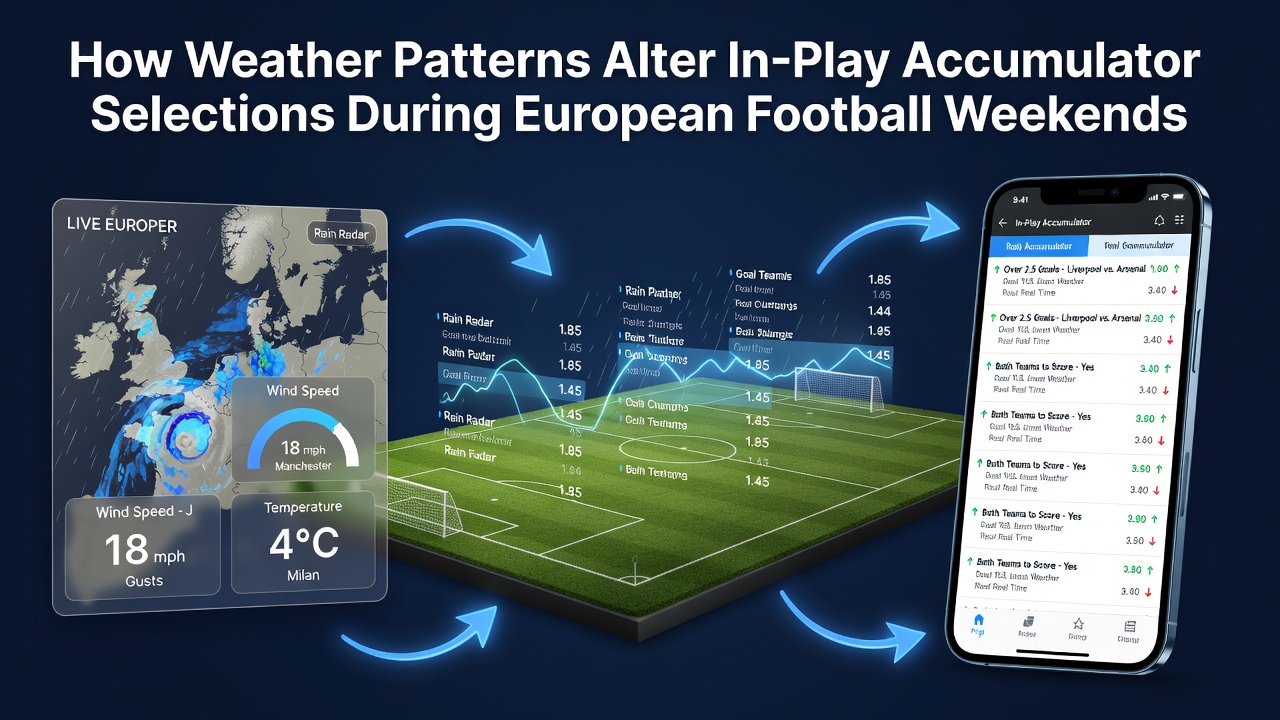
European football weekends bring together leagues across multiple countries, and weather conditions frequently shift how matches unfold on the pitch, which in turn affects live accumulator selections that bettors adjust during play. Rain, wind, temperature swings, and humidity each alter ball movement, player movement, and scoring rates, prompting changes to ongoing bets that combine several matches into one wager. Data from past seasons shows these elements create measurable patterns that reshape in-play decisions across the Premier League, La Liga, Serie A, and Bundesliga fixtures that often run simultaneously on weekends.
Precipitation and Its Direct Effects on Match Dynamics
Heavy rainfall reduces ball speed on natural grass surfaces, leading teams to favor shorter passes and fewer long balls, while also increasing the frequency of turnovers in midfield. Studies from the European Centre for Medium-Range Weather Forecasts indicate that matches played in sustained rain see goal tallies drop by an average of 0.4 per game compared to dry conditions, a shift that influences accumulator builders who monitor live statistics for over/under markets. Wet pitches also elevate the chance of cards being issued because footing becomes less stable, which expands opportunities for bettors to pivot toward card-based legs in their accumulators mid-match.
Observers note that lighter drizzle produces different outcomes than downpours, with the former sometimes increasing sliding challenges without fully disrupting passing rhythms. In July 2026, pre-season friendlies and early international windows already demonstrated these variances when several clubs traveled to regions experiencing sudden summer storms, forcing rapid tactical adjustments that carried into the opening competitive weekends.
Wind Patterns and Tactical Adjustments
Strong crosswinds or tailwinds change the trajectory of long passes and set pieces, often pushing teams toward ground-based attacks rather than aerial routes. Research published in the Journal of Sports Sciences highlights that wind speeds above 25 km/h correlate with a 12 percent rise in inaccurate crosses, which live bettors track when deciding whether to add or remove goal-scorer props from their accumulators. Goalkeepers also face added difficulty judging high balls in gusty conditions, creating more opportunities for rebounds and second-chance goals that can swing multi-leg bets in the final twenty minutes of matches.
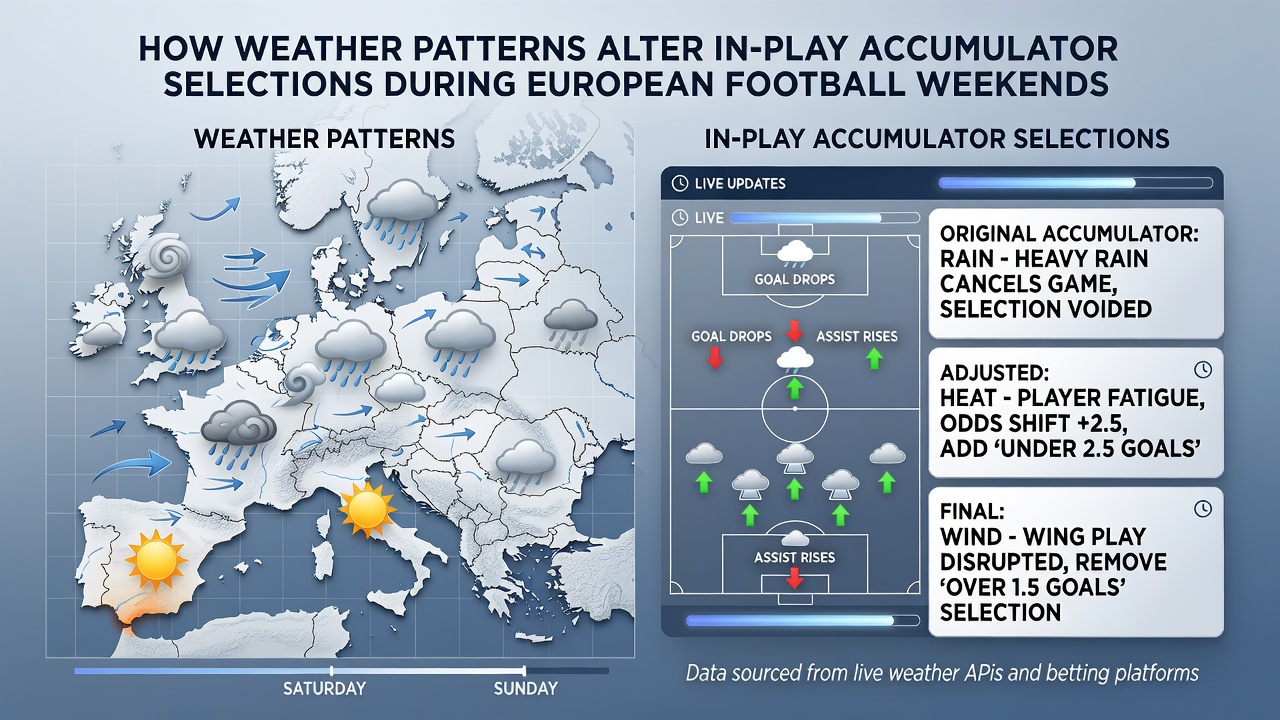
Temperature and Humidity Influences on Player Output
Higher temperatures and elevated humidity levels accelerate fatigue, particularly in the second half, which leads to slower pressing and more defensive setups. Figures from the German Weather Service reveal that Bundesliga matches played above 28 degrees Celsius record fewer high-intensity runs per player, prompting accumulator selectors to favor under totals on corners and shots once the live feed shows visible signs of tiredness. Cooler evening conditions, by contrast, often maintain higher work rates throughout ninety minutes, sustaining the pace that supports over markets in combined selections.
Those who follow detailed match tracking note that humidity above 70 percent amplifies these effects because sweat evaporation slows, reducing recovery between sprints. This pattern appears consistently across southern European venues where afternoon kickoffs coincide with peak summer warmth, while northern fixtures tend to benefit from milder evening air that preserves stamina longer.
Regional Variations Across European Leagues
Coastal leagues such as those in Portugal and the Netherlands encounter more variable wind and rain combinations than inland competitions, leading to distinct accumulator strategies when multiple countries host matches on the same weekend. Data compiled by the European Football Association shows that Portuguese Primeira Liga games experience rain interruptions in roughly 18 percent of fixtures during autumn and spring, compared with 9 percent in the Swiss Super League. Bettors therefore monitor weather feeds from different regions simultaneously and adjust legs accordingly, often swapping high-scoring expectations for draw or low-scoring options when storms move across multiple countries at once.
Live Data Integration and Accumulator Flexibility
Modern tracking tools supply minute-by-minute updates on pitch conditions and player metrics, allowing selections to shift within minutes of a weather change. When sudden showers begin during a late Saturday kickoff, for instance, accumulators that started with over 2.5 goals across three matches can be revised by replacing one leg with a card or corner market once the rain alters the tempo. Analysts at sports performance institutes have documented that such mid-match pivots occur more frequently on weekends when at least four major leagues run parallel schedules, because weather systems rarely affect every venue equally.
Conclusion
Weather patterns continue to serve as a measurable variable that shapes in-play accumulator selections throughout European football weekends. Precipitation, wind, and temperature each produce documented changes in scoring, discipline, and possession that live bettors incorporate into ongoing wagers. As tracking technology and regional weather reporting improve, these adjustments become more precise, reflecting the consistent influence atmospheric conditions exert on match outcomes across the continent.